
On this page
- First: make sure you are findable at all
- Second: have a real page for each thing you do
- Third: use the words your customers use
- Fourth: titles and descriptions
- Fifth: if you have a location, claim it
- Sixth: write things worth linking to
- What matters less than you are told
- Where speed comes in
- And it is slow
SEO attracts more nonsense than any other part of this industry, largely because the results are slow and hard to attribute — which makes it easy to sell and hard to disprove.
The fundamentals are neither complicated nor secret. For a small business a handful of things account for nearly all of the benefit, and most of them are things you can do yourself without buying anything.
First: make sure you are findable at all
Before anything clever, check that the basics are not broken. These are rare but catastrophic, and we have found every single one of them on a live site belonging to somebody paying for marketing.
- The site is not blocking search engines. WordPress has a “discourage search engines” setting used during development that gets left on after launch. It is one tick box and it makes you invisible.
- Your pages are actually indexed. Search
site:yourdomain.comand count what comes back against what you expect. - Google Search Console is set up. Free, and the only place Google tells you directly what it thinks is wrong.
- One version of the domain. With and without www, http and https, should all resolve to one address rather than existing as separate copies.
Second: have a real page for each thing you do
This is the single highest-value thing most small businesses are not doing.
If you offer six services and they share one Services page with a paragraph each, you have one page competing for six different searches and winning none of them. Six proper pages, each thorough on one subject, can each rank for their own thing — and each gives you somewhere specific to send people.
“Thorough” means answering the questions somebody actually has about that service: what it involves, what it costs or what drives the cost, how long it takes, what you need from them, and what happens first.
The same applies to places. A business serving several towns needs a real page per town — not the same text with the name swapped, which is both obvious to a reader and ineffective, but a page with genuinely local content.
Third: use the words your customers use
Businesses describe themselves in industry language. Customers search in plain language. The gap between the two is free traffic that nobody is collecting.
You do not need an expensive tool to find these words:
- Read your own inbox. The questions people email you are, word for word, what they typed into Google first.
- Look at “People also ask” on a search for your main service.
- Ask whoever answers the phone what people say. They know, and nobody has ever asked them.
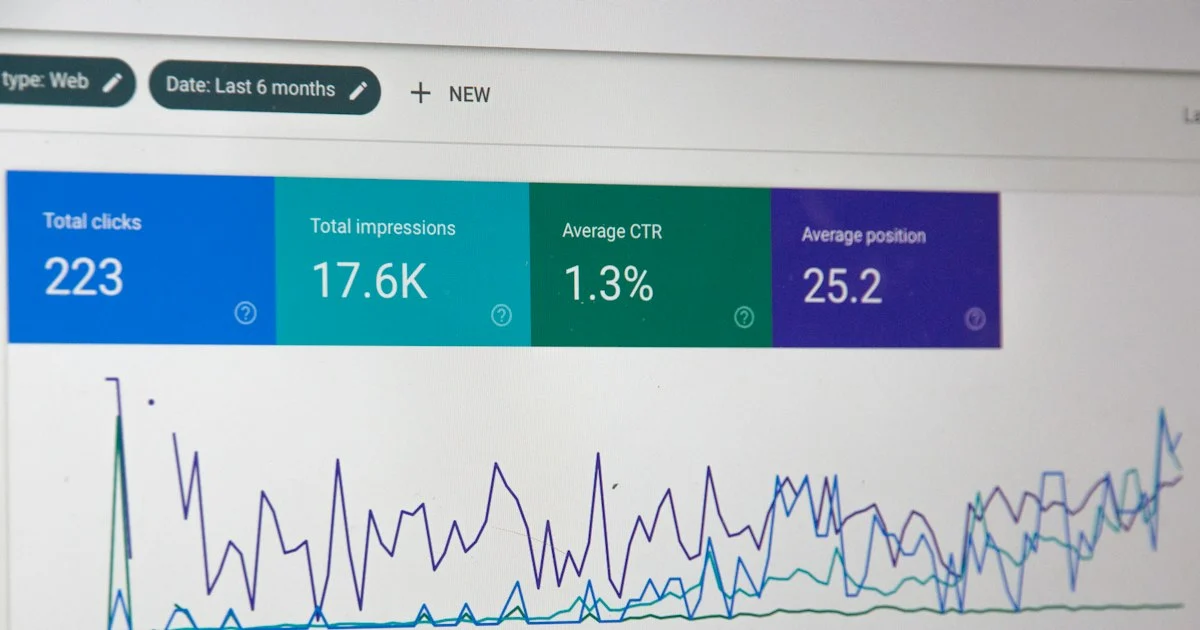
- Check Search Console for queries you already appear for but rank badly on. Those are the cheapest wins available.
Then use those words in the headline, the page title and the body — because that is genuinely what the page is about, not as a trick. Repeating a phrase unnaturally stopped working a very long time ago and reads badly to the humans you are trying to convince.
Fourth: titles and descriptions
The page title is the blue link in search results and one of the stronger signals you control directly. Every page needs its own, describing that page specifically rather than your company generally.
| Element | Rough length | Its job |
|---|---|---|
| Page title | 50–60 characters | Say what the page is, and include the business name |
| Meta description | Up to about 155 characters | Earn the click. Not a ranking factor, but it decides whether anyone chooses you |
| H1 | One per page | The headline a reader sees |
| URL | Short and readable | /services/kitchen-fitting/ beats /page?id=47 |
| Image alt text | A short description | Accessibility first, image search second |
Google rewrites titles and descriptions when it thinks it can do better, which it often can. That is not a reason to leave them blank; it is a reason not to agonise.
Fifth: if you have a location, claim it
For anyone serving a local area, Google Business Profile often sends more customers than the website does. It is free, and it is routinely half-finished.
Complete every field. Pick the right primary category — this matters more than most of the rest. Add real photographs rather than stock. Keep opening hours accurate, including the odd bank holiday. Ask satisfied customers to leave reviews, and reply to all of them, including the bad ones, briefly and without defensiveness.
Make sure your name, address and phone number are written identically everywhere they appear online. Inconsistency there genuinely confuses things, and it accumulates over years of directory listings nobody remembers creating.
Sixth: write things worth linking to
Links from other sites remain one of the strongest signals. You cannot buy good ones — well, you can, and it is a reliable way to get penalised eventually.
What works for a small business is unglamorous: be listed in the trade bodies and local directories that actually matter in your field, sponsor something local, answer a journalist’s question, and write the genuinely useful guide nobody else in your industry has bothered to write.
One page that becomes the reference for a narrow question is worth more than fifty thin ones. It is also far more pleasant to produce.
What matters less than you are told
- Keyword density. Not a thing. Write naturally.
- A perfect score in an SEO plugin. Those green lights measure whether you followed the plugin’s rules, not whether the page is any good.
- Publishing constantly. Five excellent pages beat fifty thin ones, and thin pages can actively hold a site back.
- Your platform. It makes almost no difference, whatever anybody claims. What matters is speed, structure and content quality, all achievable anywhere.
- Meta keywords. Ignored for roughly fifteen years and still being sold.
Where speed comes in
Technical groundwork helps and is worth doing properly: fast pages, clean structure, sensible markup, a site that works on a phone. We build that in rather than selling it separately.
But technical SEO only removes obstacles. It does not create demand — the content does that. A perfectly optimised page about something nobody searches for will sit there for ever. There is more on the speed side in why your website is slow.
And it is slow
Months, not weeks, especially for a newer site. Anybody guaranteeing a position on page one within thirty days is either lying or planning something that will cost you later.
Set the expectation accordingly, measure enquiries rather than rankings, and judge it over quarters. Rankings are a means; enquiries are the point, and it is entirely possible to improve one without the other.
Tell us what you want to be found for and we will tell you honestly whether the site is the thing holding you back — sometimes it is, and often it is not.