Technical Kalyan
A WordPress website and blog for a Kolkata-based local SEO and AI search consultancy — services, long-form articles and a single enquiry path, all editable by the client.
Challenge
Technical Kalyan is a one-person consultancy selling local SEO and AI search optimisation — answer engine and generative engine optimisation — to businesses across India, and white-label work to agencies in the US, UK, Canada and Australia.
Two things made it harder than a standard brochure site. The first is that almost nobody shopping for SEO can tell two providers apart from their homepages; the category is full of identical promises. The second is that the whole proposition depends on publishing. A consultancy that cannot be found in search has already lost the argument, so the site had to carry a steady stream of long-form articles without becoming a maintenance job in itself.
Approach
WordPress, because publishing is the point. The content types, categories and tags needed to be the client's to manage, and the articles needed somewhere structured to live rather than being bolted on later as an afterthought.
The structure was agreed before any design: a homepage that leads with the person rather than a list of services, because in a crowded category the differentiator is who is doing the work; a services section that names what is actually delivered; a blog organised around a controlled set of categories rather than free tagging; partner and location pages for the terms people really search; and one conversion path repeated throughout — a free SEO and AI search audit — instead of five competing calls to action.
Everything a consultancy changes often — posts, categories, services, reviews — is editable from the WordPress admin. No routine update needs a developer.
Solution
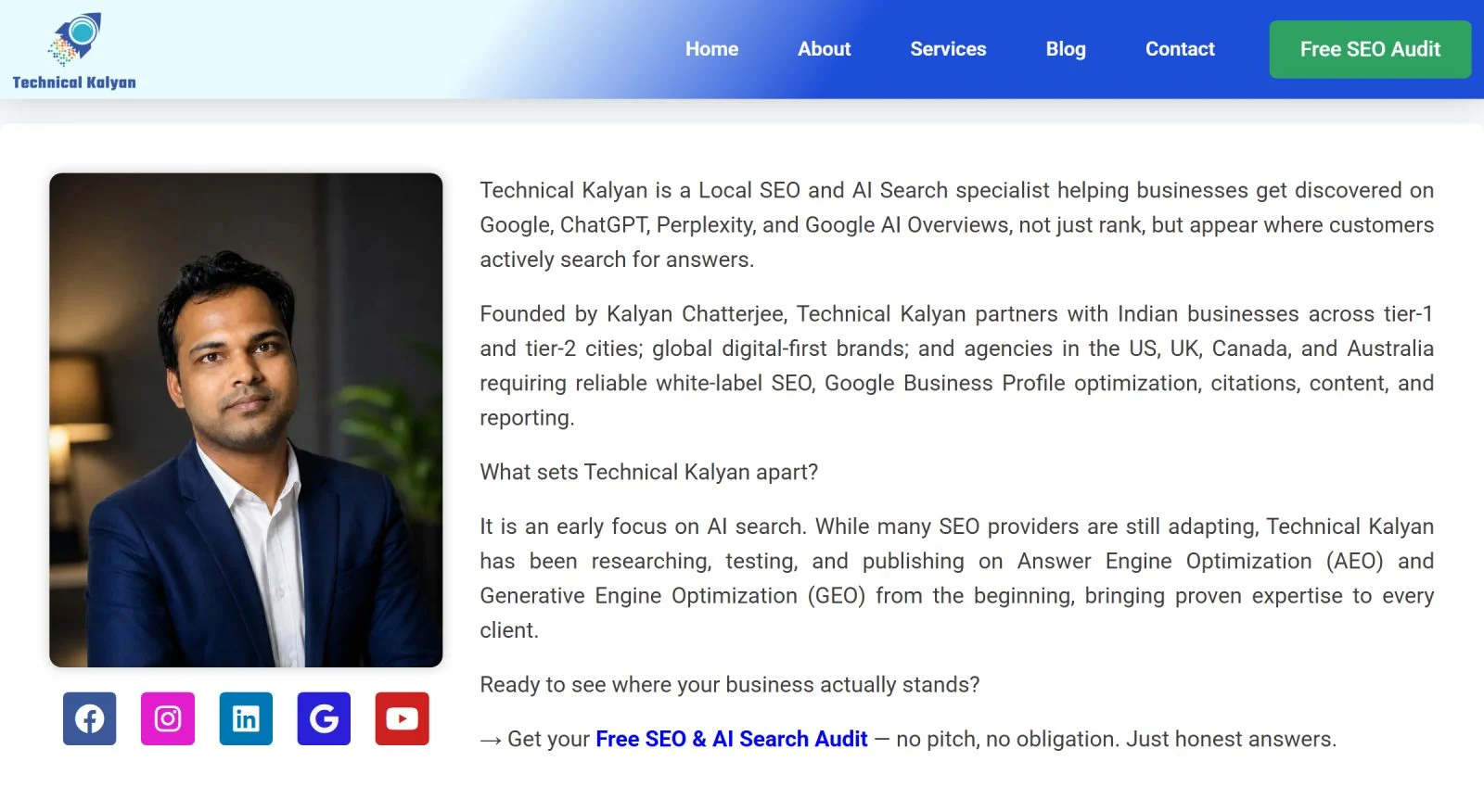
The live site opens with the founder, a plain statement of what the consultancy does and the audit call to action, followed by skills, the service list with a published monthly package price, client reviews pulled through from Google, and the most recent articles.
The blog is the engine room. Article pages carry a sidebar with search, recent posts and the full category list — AI SEO, Local SEO, Google Business Profile, On-Page SEO, Digital Marketing Strategy and the rest — plus tags and sharing, so somebody who arrives from one search has an obvious route to the next thing they need.
The footer carries the pages doing the local and partner work: agency partner, white-label SEO and Kolkata, alongside the phone number, email address and office address that a local search result expects to be able to confirm.
A consultancy site has a slightly different job from a shop or a brochure. It has to answer the question the visitor arrived with, prove the person behind it knows the subject, and then make the next step obvious — usually all within one page, because most visitors land on an article rather than the homepage.
That shaped most of the decisions on this build:
| What the site has to do | How it is handled |
|---|---|
| Publish often, without a developer | WordPress with a controlled category set, so new articles file themselves correctly |
| Be found for local terms | Dedicated location and partner pages, with the address and contact details a local result expects |
| Prove credibility quickly | Founder-led homepage, Google reviews on the page rather than only on the profile |
| Turn readers into enquiries | One offer — a free SEO and AI search audit — repeated in the header, the body and the footer |
If you are planning something similar — a site whose main job is to publish and be found — the WordPress development page covers how we build them, and a short brief is enough to start the conversation.
-
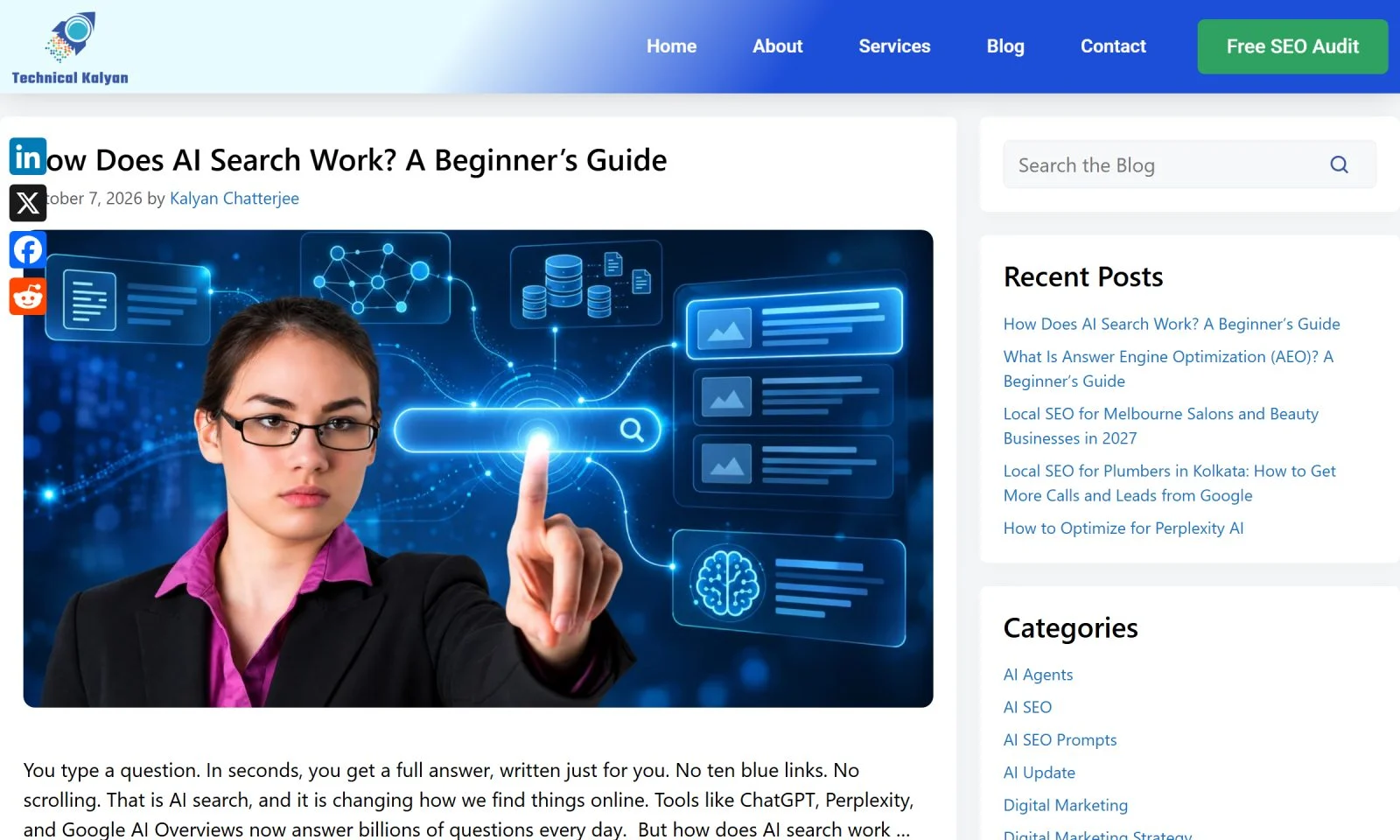
The blog: sidebar search, recent posts and the full category list on every article. -
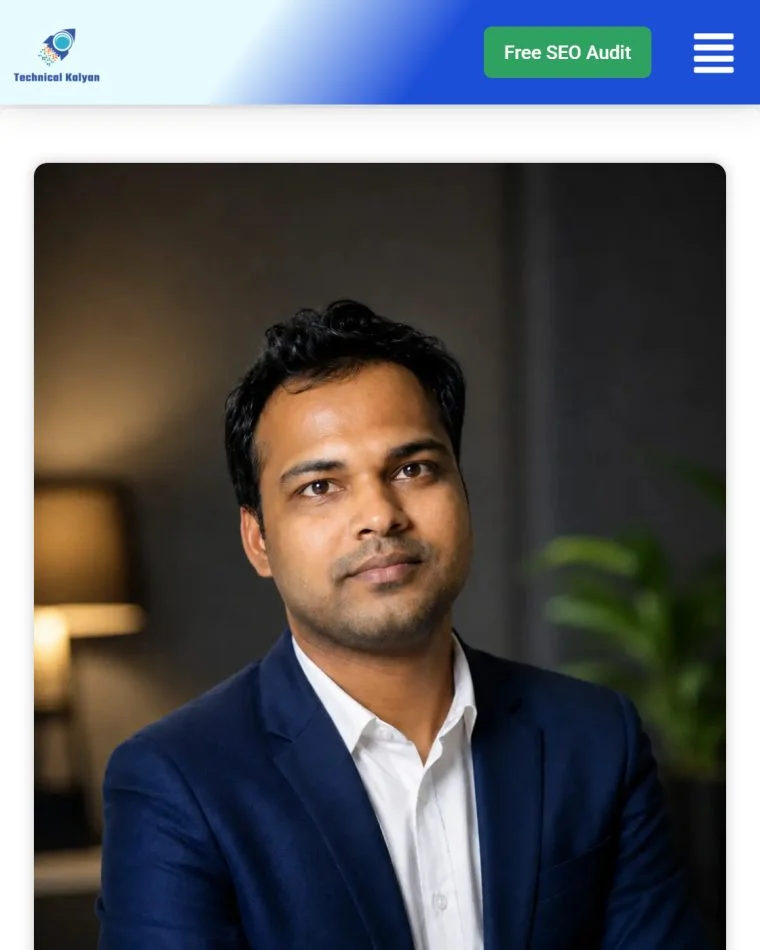
The same homepage on a phone, where most local searches start.